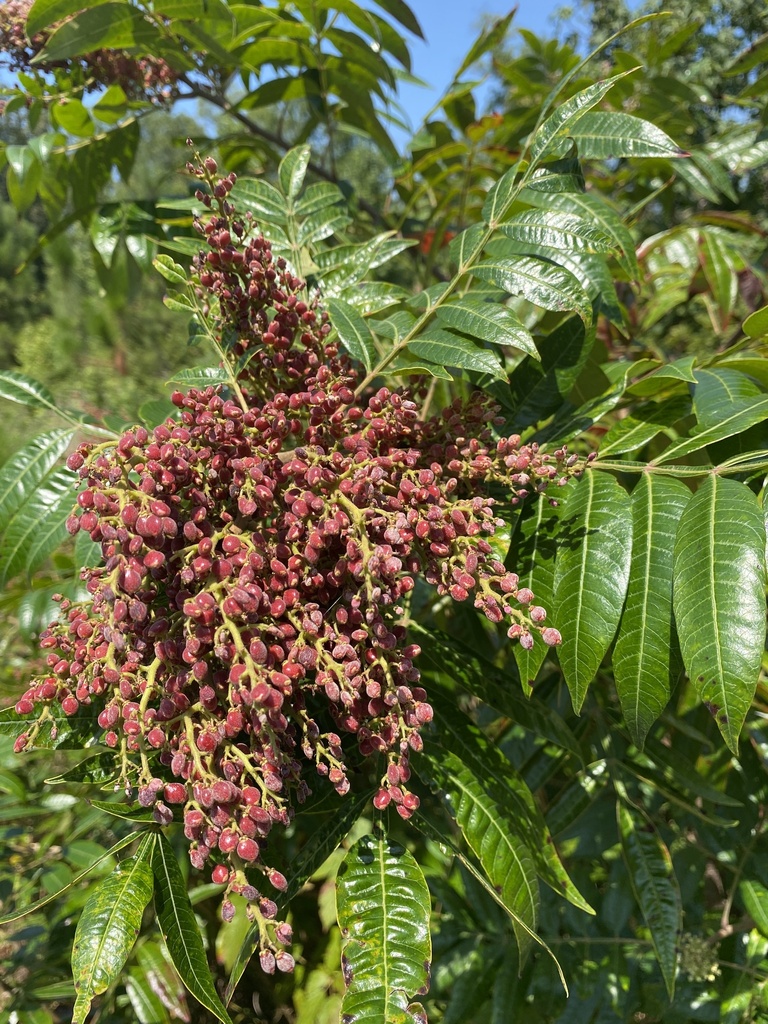
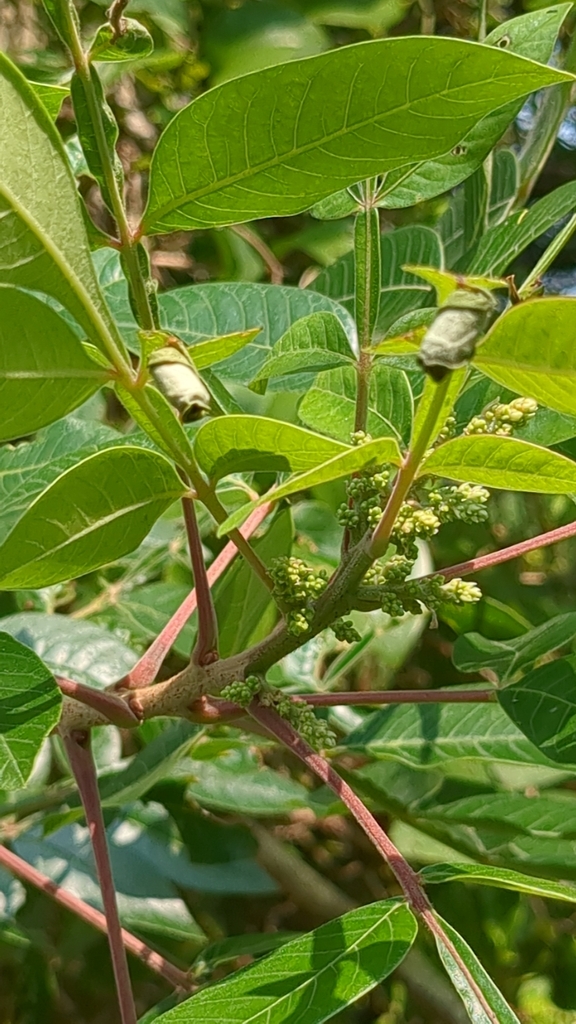
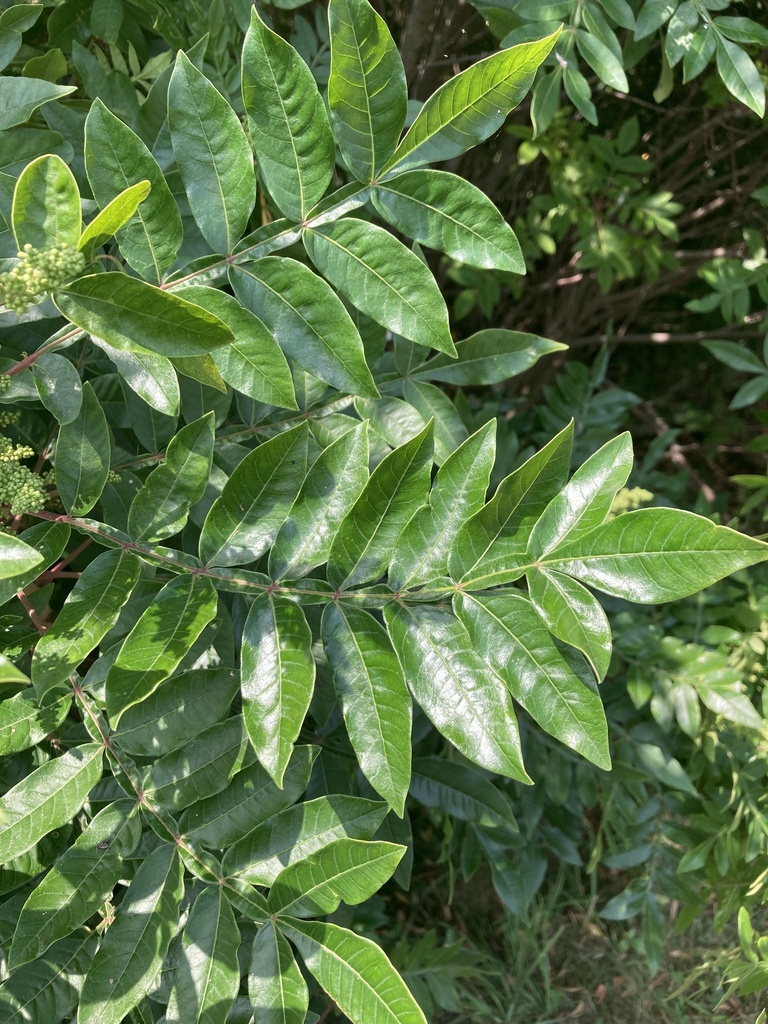
In North Florida, the winged sumac (Rhus copallinum) is an ecological boon, providing sustenance to various birds with its fruit throughout the winter and offering nectar to bees and other pollinators during its flowering season. Its dense growth habit offers shelter and nesting opportunities for birds and small mammals while also serving as a larval host for several butterfly and moth species, thus supporting the region’s intricate food webs. The plant’s robust root system also plays a crucial role in soil stabilization.
Shining sumac is often cultivated, but it is well-suited to natural and informal landscapes because it has underground runners that spread to provide dense, shrubby cover for birds and wildlife. This species is valued for ornamental planting because of its lustrous dark green foliage, which turns brilliant orange-red in fall.
Source: Wikipedia.