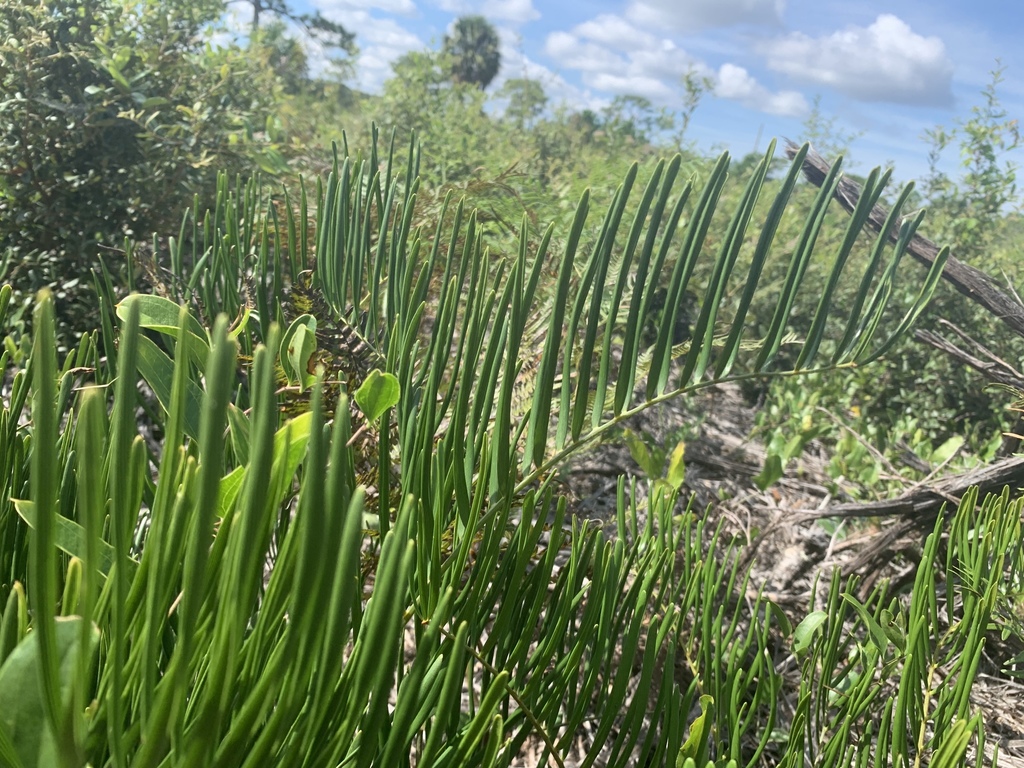
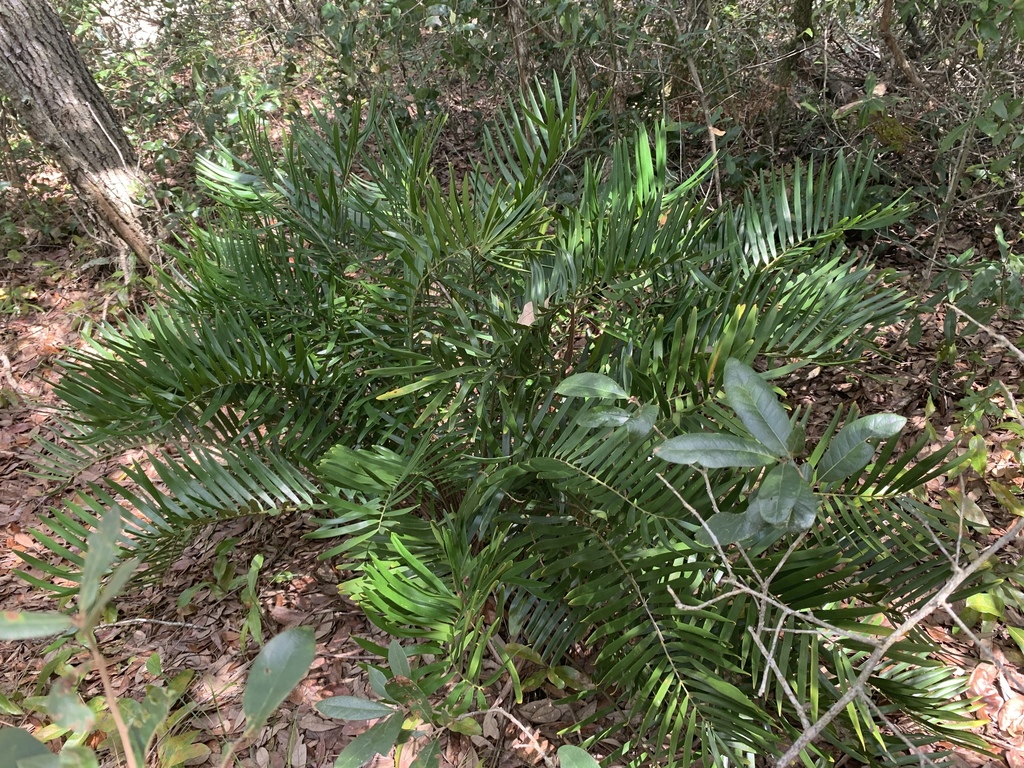
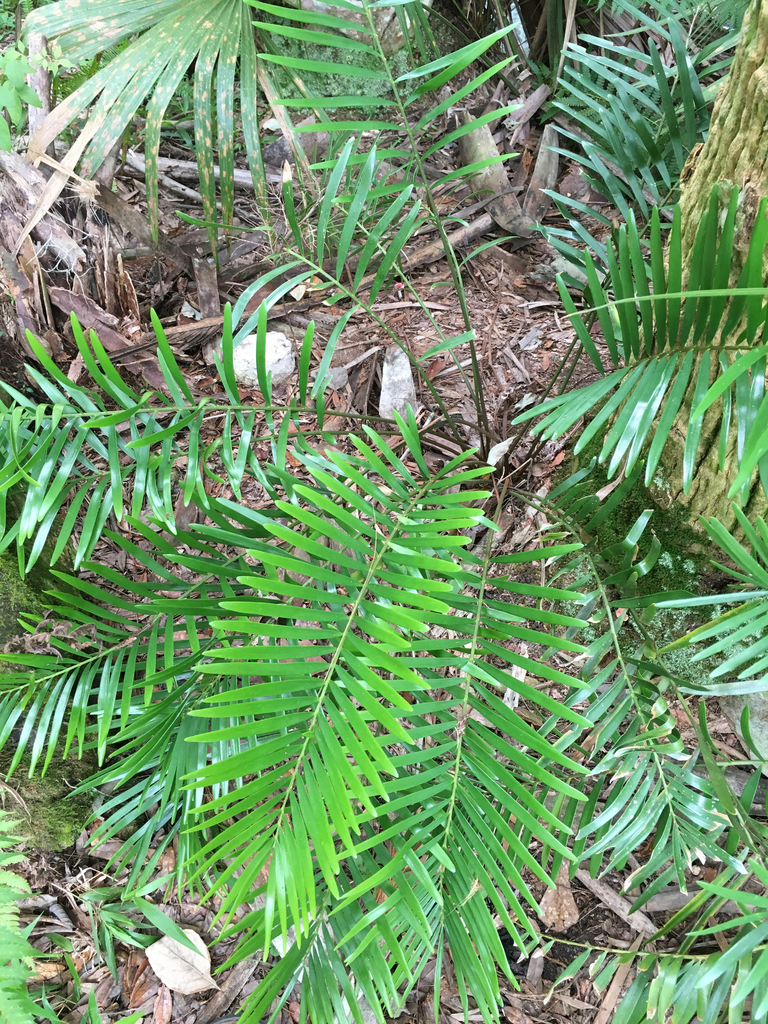
Zamia integrifolia, or the coontie palm, is a small, tough, woody cycad native to the southeastern United States (Florida and Georgia), the Bahamas, Cuba, and the Cayman Islands. The name “coontie” is derived from the Seminole “Conti haka.”
Indigenous tribes of Florida, including the Seminoles and Tequestas, created a powder from the coontie (after leaching out a toxin called cycasin, which can cause liver failure). This powder was used to make a bread-like substance. Two of the plant’s common names, Florida arrowroot and wild sago, refer to the former commercial use of this species as the source of edible starch. By the late 1880s, several mills in the Miami area started to produce Florida arrowroot, continuing until just after World War 1.
Zamia integrifolia inhabits various habitats with well-drained sands or sandy loam soils. It prefers filtered sunlight to partial shade. Populations are presently limited to Florida and southeastern Georgia in the United States, western Cuba, the Bahamas (on Andros, Grand Bahama, Great Abaco, Long Island, and New Providence islands), and the Cayman Islands.
Source: Wikipedia.