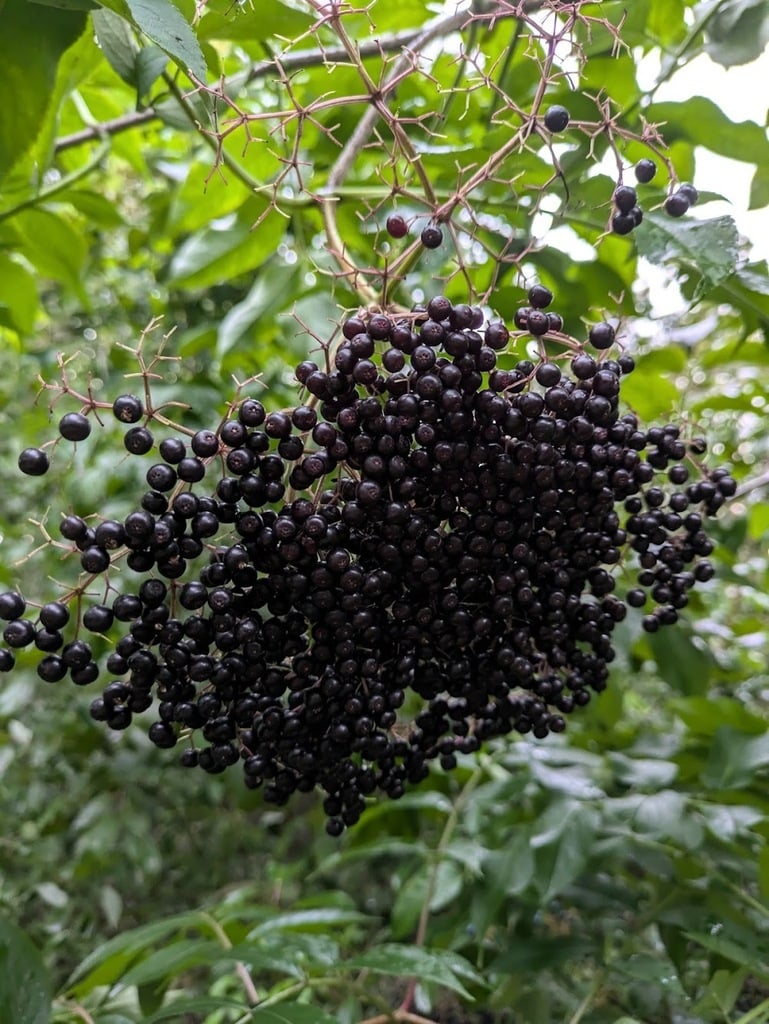
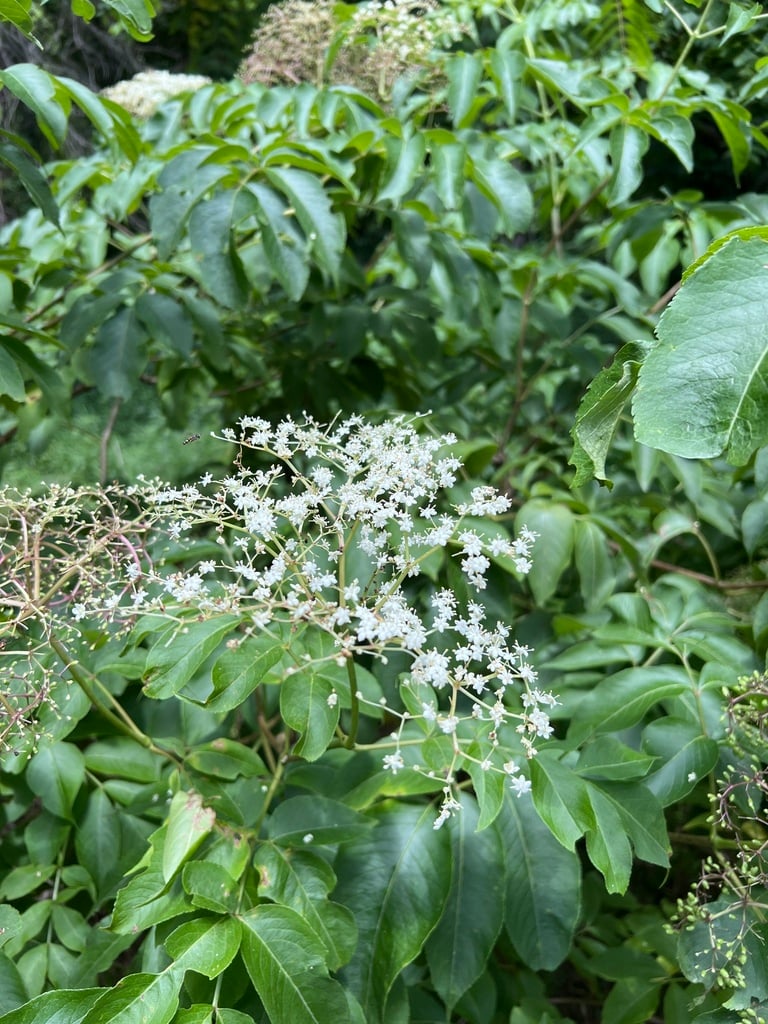
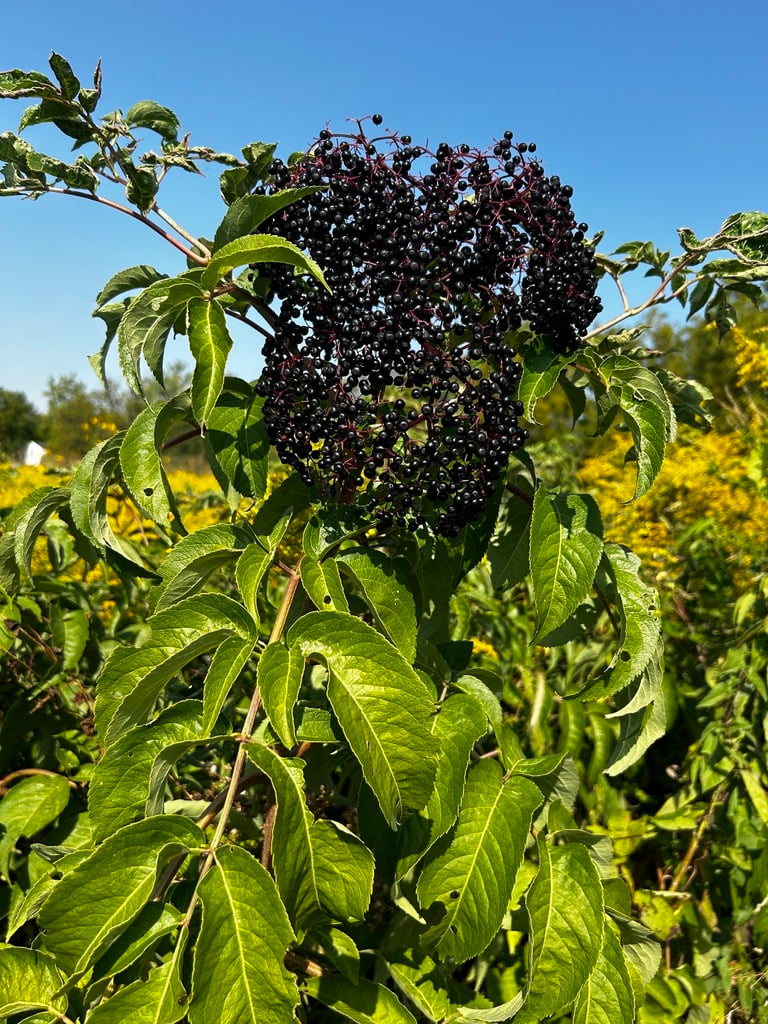
The American elderberry, Sambucus canadensis, is indigenous to north Florida and plays a vital ecological role by forming dense thickets that provide shelter and nesting sites for wildlife. It’s a boon to birds, offering ripe berries in late summer and insects, which feed on its nectar-rich flowers. Medicinally, elderberry is valued for its immune-boosting properties and is often used in syrups and teas to combat flu and cold symptoms. But take great care! Unripe berries and other parts of the plant are toxic if consumed.
It is a deciduous suckering shrub growing 20 ft tall. The leaves are arranged in opposite pairs, pinnate with five to nine leaflets, and around 4 inches long. In summer, it bears large corymbs or white flowers above the foliage, the individual flowers with five petals.
Source: Wikipedia.